

If you’re a new creator today, it can feel like you’ve stepped into a maze of programs, requirements, thresholds, and payout models, each one different depending on where you publish. One platform pays for long-form storytelling, another for retention, another for community support. And somewhere inside all of that is the real opportunity.
That’s why this guide exists. In this guide, we’ll break down how today’s creator programs actually work, from YouTube and TikTok to Instagram, Snapchat, Pinterest, and LinkedIn. You’ll learn what pays, what doesn’t, who qualifies, and how smart creators are turning their content into sustainable income.
1. YouTube Creator Monetisation Programs
With over 2.7 billion monthly users, YouTube isn’t just a social platform. It’s a search engine, a streaming service, and an ad network combined. That’s why YouTube creators continue to earn more than on almost any other platform.
But YouTube monetisation today is no longer just about ads. It’s layered, diversified, and built to reward creators who keep people watching.
YouTube Partner Program (YPP)
For most creators, the YouTube Partner Program is the first real milestone. It’s the gateway to YouTube’s monetisation ecosystem, and it was and remains one of the most reliable ways to turn long-form content into recurring revenue.
Once accepted into YPP, creators earn a share of ad revenue from:
- Long-form videos.
- Live streams.
- And YouTube Shorts.
For long-form content, YouTube typically shares 55% of ad revenue with creators. This translates to an average RPM (revenue per 1,000 views) of $1–$6, with higher rates in niches like finance, business, and education. You know, your typical ad-friendly niches.
Shorts, on the other hand, don’t show ads on each video. Instead, ads play between Shorts in the feed. All the ad money goes into a shared pool and is then divided among creators based on how much watch time their Shorts get.
Creators with strong retention and frequent posting benefit the most. Creators can qualify for YPP through one of two paths:
- 1,000 subscribers + 4,000 valid public watch hours in the past 12 months. or
- 1,000 subscribers + 10 million valid Shorts views in the past 90 days.
These thresholds are designed to reward consistency, not virality. That’s why tools like Nuelink are vital, they help you keep a strong and steady posting pace. A single viral video can help, but it won’t replace steady output.
YPP is not the only way to make money on the platform; YouTube also allows creators to monetise directly through:
- Channel memberships (monthly subscriptions).
- Super Chat and Super Thanks during live streams and videos.
- Integrated merch shelves connected to approved stores.
2. TikTok Creator Monetisation Programs
TikTok's monetisation model has gone through the biggest reset of all major platforms.
With over 1.6 billion monthly active users, TikTok offers massive reach. What TikTok no longer offers is easy money for short viral clips, it now pays creators for depth and value.
1. TikTok Creator Rewards Program
The TikTok Creator Rewards Program, which we have gone over in more depth recently, officially replaced the original Creator Fund, and the difference is night and day.
The old fund paid from a fixed pool, often resulting in payouts of $20–$40 for a million views. Payouts are now tied directly to performance and advertiser value.
Creator Rewards payouts are based on:
- Qualified views (authentic, non-bot traffic).
- Watch time (how long people stay).
- Audience location (higher-value ad regions earn more since they tend to spend more).
- Originality (no reposted or stitched content).
Creators now report earning between $0.40 and $1.00 per 1,000 qualified views, depending on retention and niche.
That means a well-performing video with 1 million qualified views can earn hundreds, sometimes over $1,000, a massive jump from the old model.
2. TikTok Creativity Program
Alongside Creator Rewards, TikTok continues to invest in what it calls “creative excellence.”
The TikTok Creativity Program focuses on high-quality, original storytelling, not trends, reposts, or recycled formats. The program prioritises:
- Original scripts and voiceovers.
- Clear narrative structure.
- Educational or entertaining value.
- Strong viewer completion rates.
Content that simply follows trends without adding value struggles to qualify. Since it rewards longer watch time and deeper engagement, the program typically pays more per view. Many creators report earnings of $3–$6 per 1,000 views, and highly engaging videos can earn even more.
3. Instagram and Meta Creator Monetisation Programs
Instagram monetisation is quieter than TikTok or YouTube, but it’s far from dead. With over 3 billion monthly active users, Instagram remains one of the strongest platforms for creator visibility.
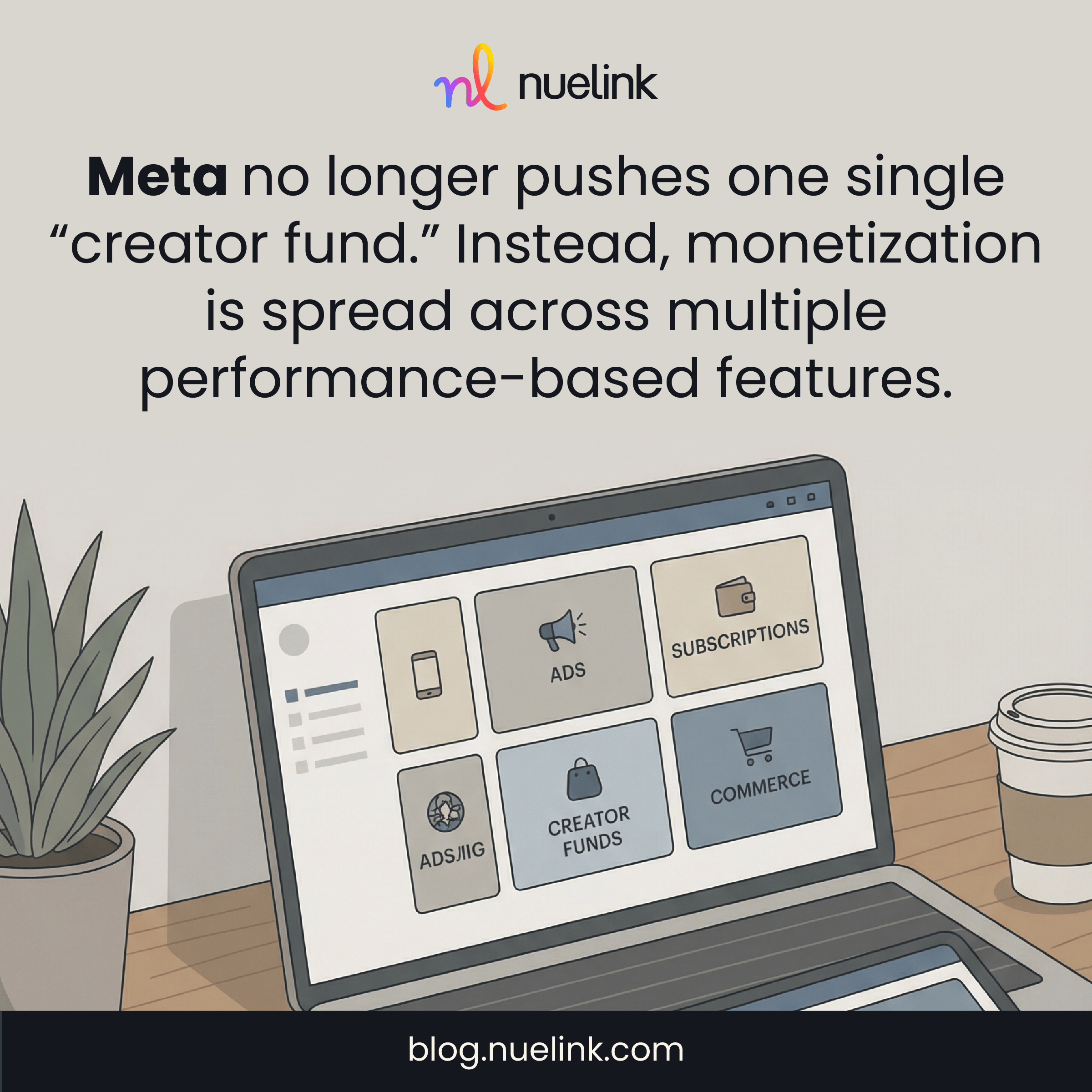
The difference is that Meta no longer pushes one single “creator fund.” Instead, monetisation is spread across multiple performance-based features, many of them invite-only.
For creators who already have engaged audiences, Instagram monetisation works best as an added bonus, not a foundation, since it’s not the most profitable or reliable.
1. Instagram Reels Monetisation and Bonus Programs
Instagram originally experimented with large Reels bonuses to compete with TikTok. By 2025, that strategy has shifted. Instead of open bonuses, Instagram now rewards creators through:
- Ads on Reels revenue sharing, and
- Occasional invite-only performance bonuses.
Creators earn money when ads appear between Reels, with payouts tied to:
- Watch time.
- Ad impressions.
- Audience location.
- And engagement quality.
While exact numbers vary, creators typically report earnings of $0.05–$0.50 per 1,000 Reels views, with higher rates for longer, high-retention videos.
Reels bonuses, on the other hand, are no longer widely available. Most programs are:
- Invite only.
- Time-limited.
- And restricted to specific regions.
This makes them unreliable as a steady income source, but useful when they appear. Creators who consistently post original Reels and maintain strong engagement are far more likely to receive future invitations.
2. Instagram Subscriptions And Gifts
Where Instagram really shines is direct audience monetisation. Instagram Subscriptions allow creators to charge a monthly fee for:
- Exclusive content.
- Subscriber-only Stories and Reels.
- Private Lives.
Subscription prices typically range from $0.99 to $99.99 per month, and creators keep the majority of the revenue. For mid-sized creators, subscriptions often outperform Reels bonuses in terms of consistency. Viewers can also send Stars or Gifts during live streams and on monetised Reels.
These microtransactions may seem small, but for creators with loyal communities, they can add up to hundreds or thousands per month.
4. Snapchat‘s Snap Stars Program
Snapchat doesn’t get as much attention as TikTok or YouTube, but it remains one of the most underrated monetisation platforms for creators. It sure is one of my favourites, judging by how many blogs I wrote about it.
The Snap Stars Program is Snapchat’s flagship creator monetisation program. It’s designed for creators who consistently publish high-quality, original content, and in return, Snapchat offers both visibility and monetisation.
Snap Stars are verified creators selected by Snapchat to represent the platform’s best content. Once accepted, creators gain access to:
- Monetisation through ads.
- Spotlight revenue opportunities.
- Increased discoverability across Snapchat.
Snapchat doesn’t publicly disclose payout formulas, but Snap Stars report earning from a few hundred dollars per month to well over five figures, depending on reach and engagement.
5. Pinterest Creator Fund and Inclusion Programs
While TikTok, YouTube, Instagram, and Snapchat dominate mainstream creator attention, Pinterest offers hidden opportunities, especially for niche creators.
Pinterest has increasingly invested in creators through funds, bonuses, and inclusion programs. Pinterest provides:
- Direct funding for emerging creators.
- Incentives for high-performing Pins.
- Grants for creators producing original content in trending formats.
Payouts vary, and the openings are far and few. So, it’s not the most profitable platform among this bunch.
6. LinkedIn Creator Accelerator Program
This is the least talked about monetisation program on the list, even I had to do a bit of digging. Creators with strong expertise and consistent posting can earn money on the LinkedIn Creator Accelerator Program through monetisation programs combined with consulting or digital products.
Beyond direct payments, LinkedIn accelerators help creators:
- Build authority in their niche.
- Attract partnerships and sponsorships.
- Establish a long-term revenue pipeline.
The key is leveraging LinkedIn monetisation as part of a broader professional brand, not as a standalone income source.
Monetisation programs are now performance-based and more selective. Yet they remain an essential piece of the modern creator economy.
But here’s the reality, fewer than 5% of creators earn full-time income from platform payouts alone. Even the top programs rarely replace a salary for smaller creators.
Each program has strengths and weaknesses. Combining YouTube, TikTok, Instagram, Snapchat, and niche platforms like LinkedIn or Pinterest maximises income and exposure.


