

If you spend any time in the social media world, you’ve probably heard this advice more times than you can count, just post everywhere.
Instagram, TikTok, LinkedIn, X, Pinterest, YouTube Shorts. All of it. Every day. As much as possible. And on the surface, that advice makes sense. More platforms should mean more reach. More visibility. More growth.
But in practice, this is where many content strategies start to fall apart.
Creators and brands often hope that sheer volume will do the heavy lifting. However, the problem usually isn’t how much content is being created. It’s how that content is being distributed.
Most platforms today only show any given post to a small fraction of your audience. According to Socialinsider, average reach rates have dropped 12% year-over-year, with typical posts now reaching just 3 to 4% of followers.
This means that a large portion of your audience simply never sees most of what you publish. That reality makes distribution strategy far more important than posting frequency.
And this is where confusion starts.
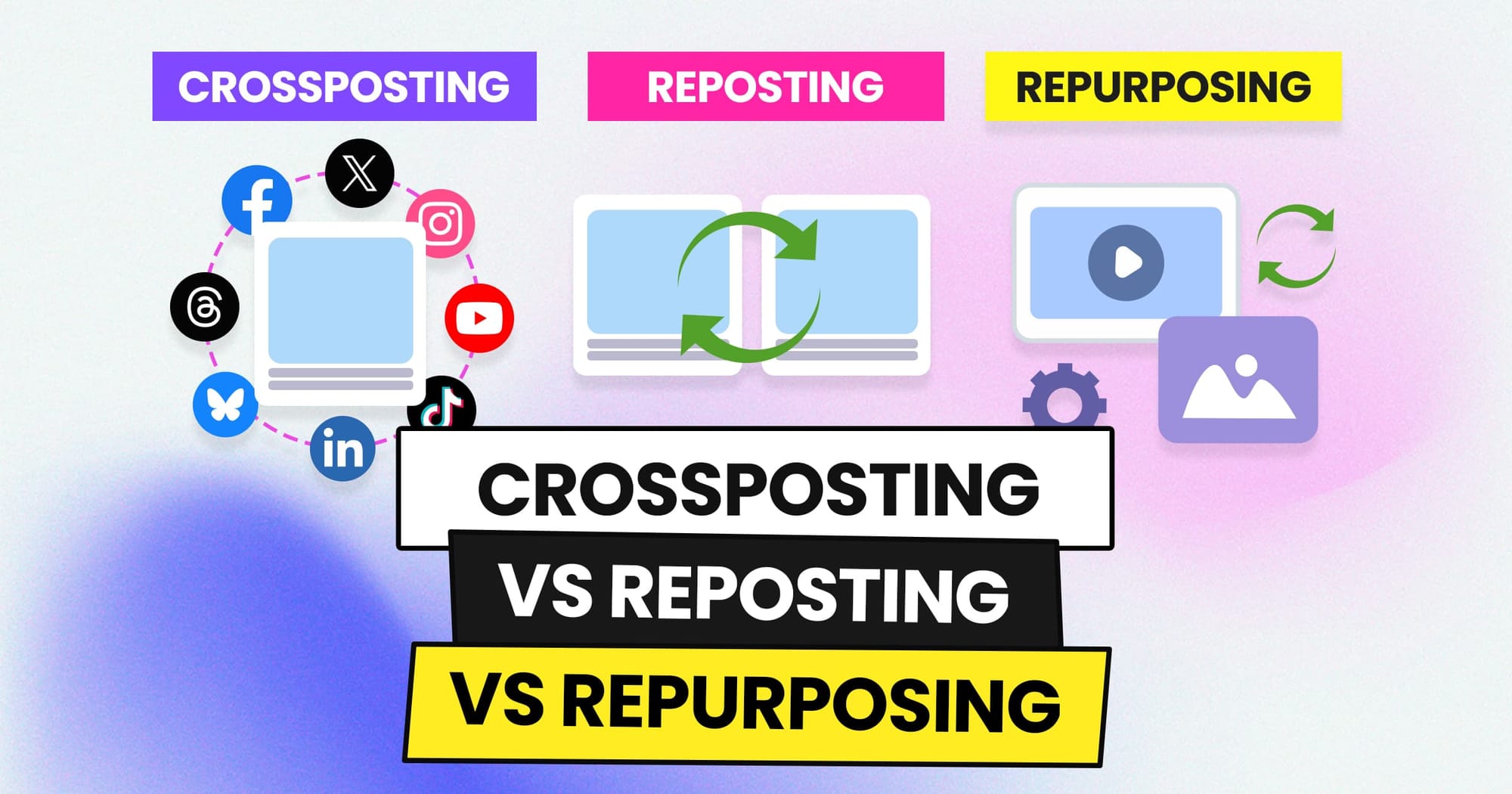
Crossposting, reposting, and repurposing are often treated as interchangeable. They are not. Each serves a different purpose, works best in different situations, and impacts growth in very different ways.
Understanding the difference between them, and knowing when to use each, is one of the biggest upgrades you can make to your content system.
Let’s break them down clearly, practically, and without any fluff.
What Is Crossposting? (And When It Actually Makes Sense)
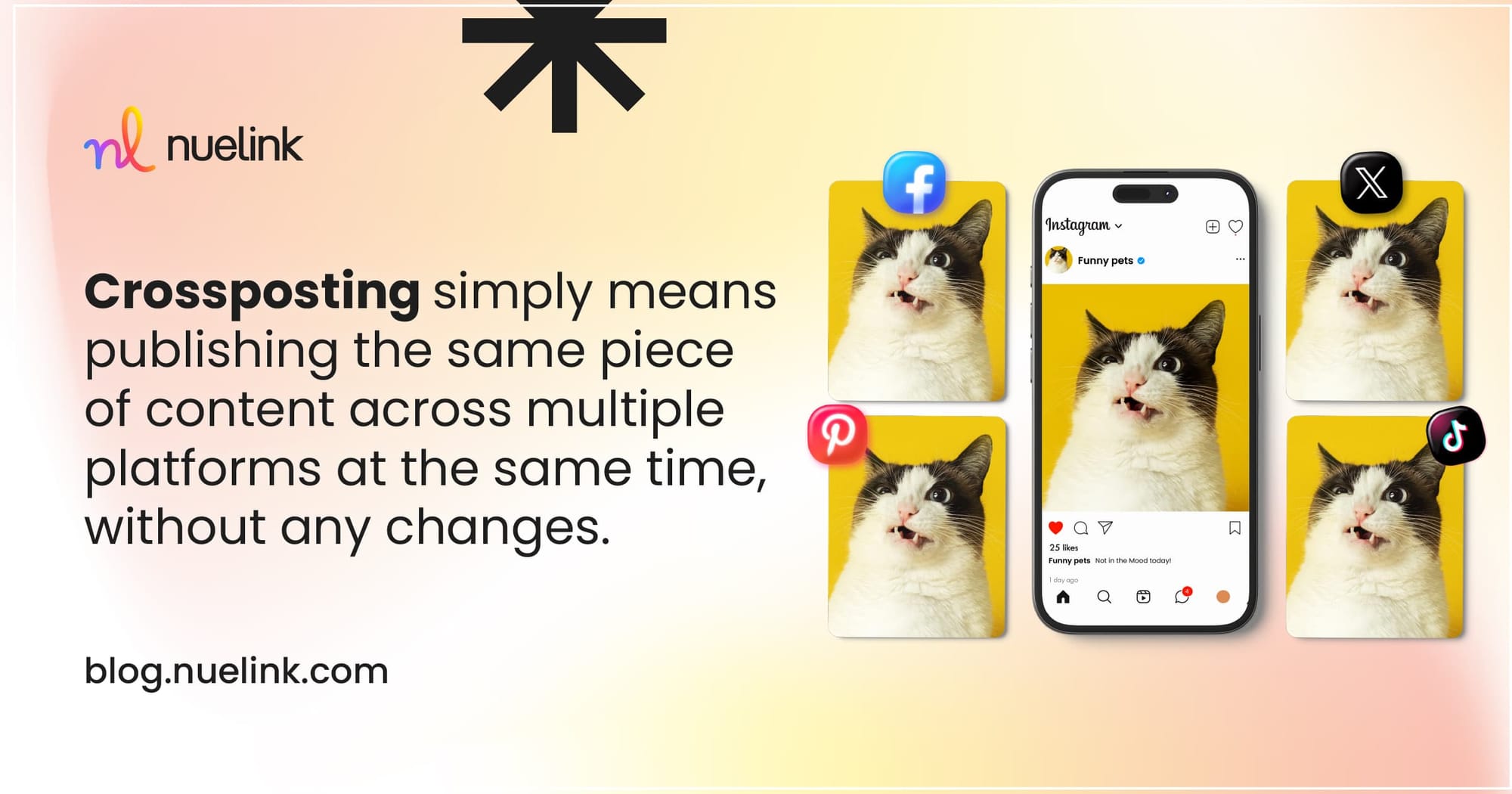
Crossposting simply means publishing the same piece of content across multiple platforms at the same time, without changing the format, caption, or structure.
The same video appears exactly the same on Instagram, TikTok, and YouTube Shorts. The same caption gets pasted onto LinkedIn and X. The same graphic is uploaded to Facebook and Pinterest.
It’s easy, efficient, and productive. And in certain situations, it genuinely is. Crossposting works best when speed, consistency, and visibility matter more than optimization.
Think along the lines of product launches, major announcements, limited-time offers, or important updates. In these cases, the primary goal is to get the word out to as many people as possible, as quickly as possible.
When timing is critical, crossposting helps remove friction. Instead of manually rewriting and reformatting content for every platform, you can push the same message out everywhere and stay consistent.
This is why many brands rely on automation workflows, like Nuelink’s Instagram crossposting or Bluesky crossposting automations, to name a few, to distribute announcements efficiently without turning publishing into a full-time job.
If you are considering crossposting, keep one thing in mind. Audiences don’t consume content the same way across platforms. TikTok users scroll quickly and expect immediate stimulation. Instagram users linger longer on visuals and often save content for later. LinkedIn users typically read more carefully and respond to narrative structure.
When content doesn’t match these expectations, it gets skipped, regardless of how valuable it may be. Crossposting, when used strategically, is a powerful distribution tool. It works best as a visibility tool, especially if your focus is poured on just one platform but you still want to stay active on your other channels.
What Is Reposting? (And Why It’s Massively Underrated)
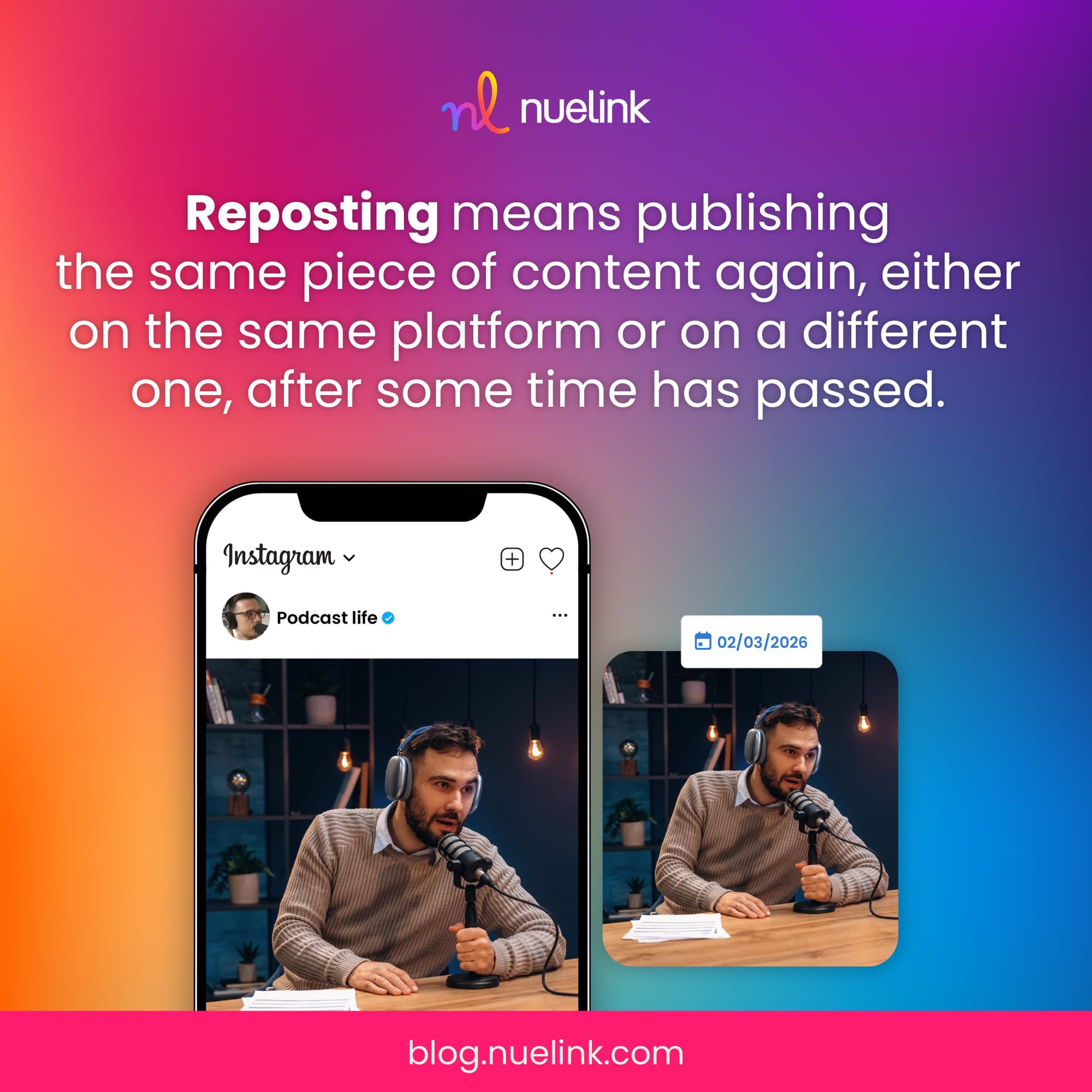
Reposting means publishing the same piece of content again, either on the same platform or on a different one, after some time has passed.
For many creators and brands, there’s a fear of being repetitive, annoying followers, or looking lazy. So instead of reusing content, they constantly push themselves to create something new.
This is one of the fastest paths to burnout. Because here’s the reality most people underestimate, very few people actually see your posts.
Even for high-performing content, distribution is uneven, unpredictable, and heavily influenced by timing, competition, and early engagement signals. In other words, when you post something once, the majority of your audience simply misses it.
This is why reposting is not redundant. It’s strategic.
Reposting allows you to extend the lifespan of your best content, increase its total reach, and maximise the return on the time and effort you already invested in creating it. In fact, studies show that over half of all reposts actually outperform the original post.
It works especially well for evergreen content, posts that stay relevant over time, such as educational threads, tutorials, tips, insights, case studies, and thought leadership. Seasonal topics, recurring reminders, and high-performing posts are also perfect candidates.
When done intentionally, reposting helps stabilize your content calendar, reduce pressure to constantly create, and maintain consistency without increasing workload.
From a performance perspective, reposting often delivers surprisingly strong results.
This approach is particularly powerful when combined with automation, FYI you can use Nuelink to auto-repost content as well.
What Is Repurposing? (The Strategy That Actually Needs a Bit More Extra Work)
Unlike crossposting, where you push the same content everywhere, or reposting, where you bring content back to life, repurposing transforms one piece of content into multiple formats, each designed for a specific platform and audience behavior.
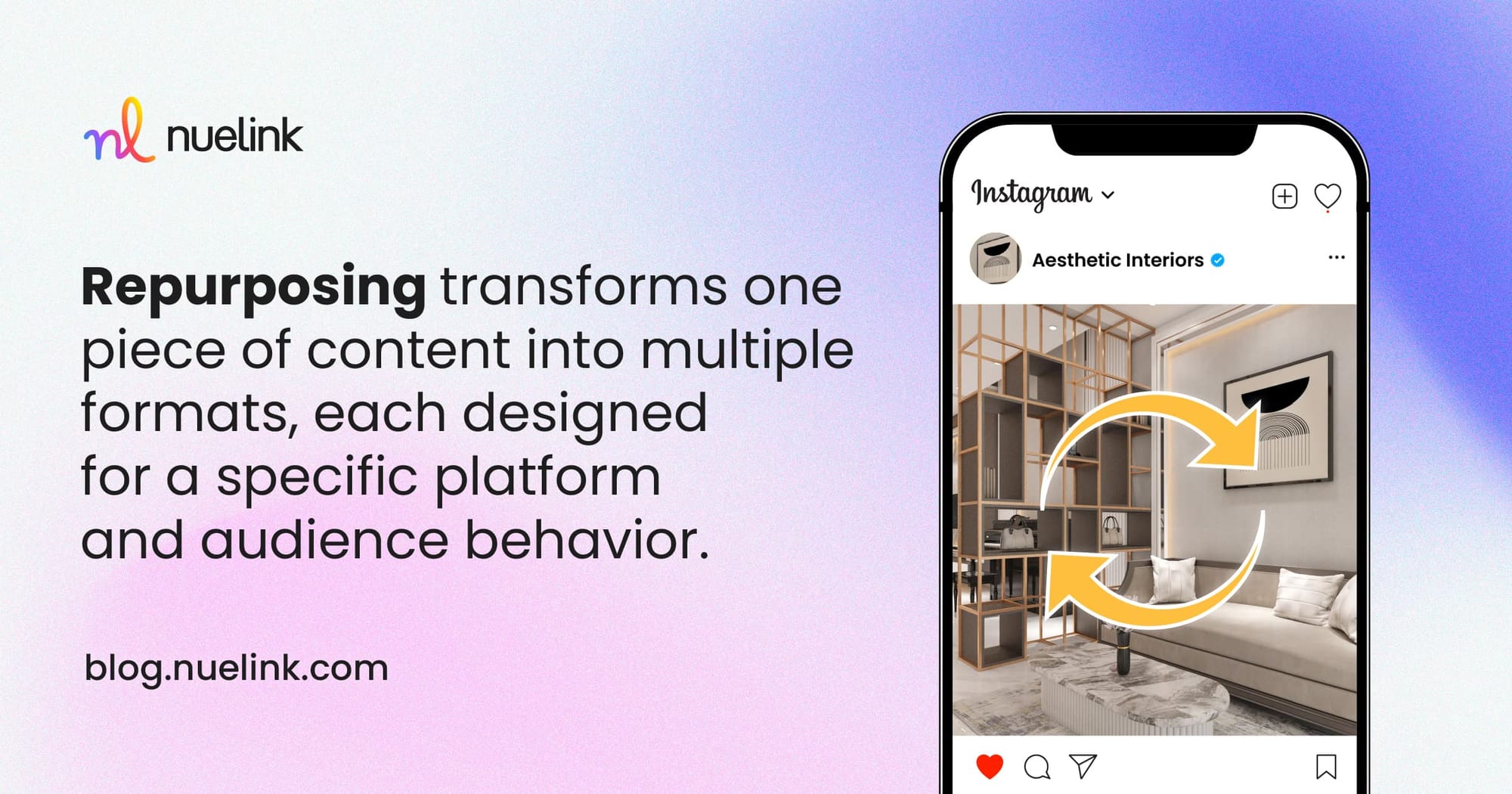
One idea doesn’t just get posted once. It becomes:
- A carousel on Instagram.
- A short-form video on TikTok or Reels.
- A LinkedIn post with a narrative twist.
- A tweet or thread.
- A Pinterest pin designed for search.
- A blog snippet or newsletter highlight.
Repurposing isn’t about copying and pasting. It’s about reshaping content to speak the language of the platform. Each format is optimized to get the most reach, engagement, and retention for that audience.
Here’s why it works:
Algorithms reward native content
Each platform has its own signals for success, we covered this and we know this. Instagram prioritizes saves and shares. TikTok rewards early watch time and fast hooks. LinkedIn boosts thoughtful commentary. Repurposing lets a single idea speak natively to all of them.
Different audiences prefer different formats
Some followers skim Instagram Stories, others scroll TikTok, and some prefer reading LinkedIn threads. Repurposing ensures the same idea reaches all audience types without forcing them into one format.
It multiplies your content’s lifespan and ROI
Instead of creating ten separate pieces of content, you create one core idea and amplify it. Brands that adopt structured repurposing workflows consistently see higher reach, stronger engagement, and faster growth without increasing production time.
It reduces burnout
Once you have a process in place, one piece of content fuels multiple channels. Creativity doesn’t need to happen constantly, strategy does.
Repurposing is essentially smarter scaling. It allows creators to maintain quality, reach more people, and grow without the exhaustion of endless new content creation.
Which Strategy Should You Use? (A Simple Framework)
By now, it should be clear that crossposting, reposting, and repurposing each have a purpose, and using them correctly makes all the difference.
Here’s a simple way to think about it:
Crossposting: Visibility & Speed
Use crossposting when speed matters most. Think along the lines of:
- Announcements, product launches, or time-sensitive updates.
- Maintaining consistent brand presence across platforms.
- Ensuring your message reaches as many people as possible, quickly.
Reposting: Efficiency & ROI
Reposting is about extending content lifespan. It works best for:
- Evergreen content, high-performing posts, tutorials, or seasonal topics.
- Reaching followers who missed it the first time.
- Maximizing ROI on content you already created.
Repurposing: Growth & Scale
Repurposing is all about making sure you meet everyone where they are at. You can:
- Transform a single idea into multiple formats for different platforms.
- Speak the language of each platform’s algorithm and audience.
- Increase reach, engagement, and discoverability without creating from scratch.
Layering Them Together
The most sensible decision here for a brand is to combine all three strategies. We don’t really have to choose, so why do? Each one serves a purpose, and we have a need for all three. So:
- Repurpose your ideas to maximize growth.
- Repost your best content to increase lifespan and ROI.
- Crosspost critical updates for fast, broad visibility.
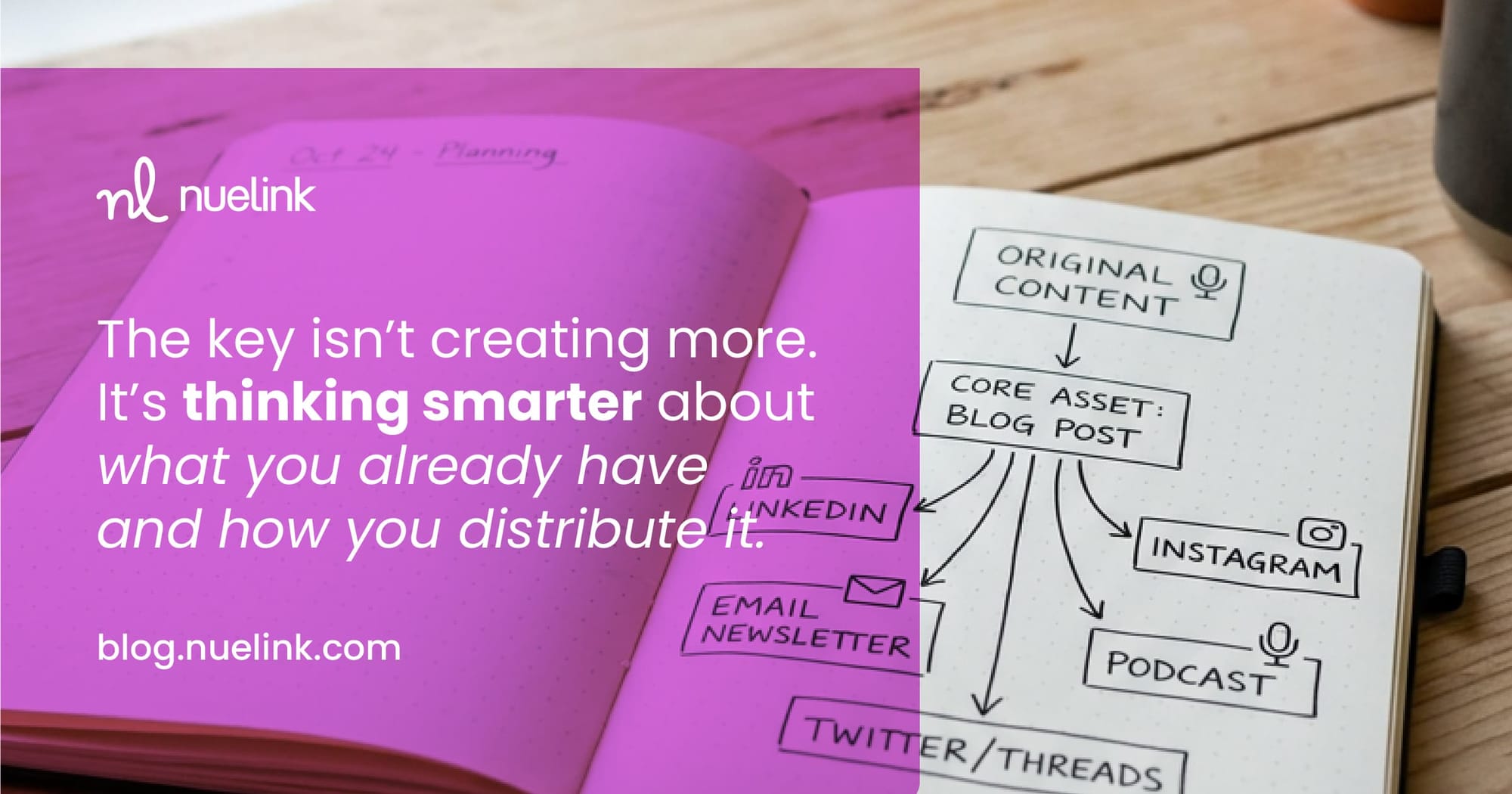
The key isn’t creating more. It’s thinking smarter about what you already have and how you distribute it.
Once you understand the differences between crossposting, reposting, and repurposing, everything about your content system becomes clearer. You stop wasting time copying and pasting. You start creating with purpose.
When done well, these strategies don’t just maintain visibility, they build momentum, extend reach, and maximize the return on every post you create.
The smartest content systems aren’t about doing more. They’re about doing it with intention.


