

Planable is a social-media management platform that was started at a hackathon in Transylvania in 2016. The project gained traction quickly; it joined the Techstars accelerator in 2017 and reached 10,000 users by 2018.
Planable was built to make collaboration and approvals between agencies/social-media managers and their clients easy.
On their homepage, Planable heavily emphasizes this promise.
This is where Planable truly stands out. Its instant, side-by-side collaboration and one-click approval system is one of the most unique selling propositions in the entire social media management space.
Teams and clients can draft posts together, leave comments directly on content, resolve feedback visually, and approve everything in a single step, removing endless email threads and screenshot chaos.
One user put it perfectly on their homepage: “It’s the best client-facing social media tool we’ve ever used and we’ve used a lot.”
Planable Pricing
Planable offers a free tier that allows users to schedule up to 50 posts with unlimited collaborators, but it excludes X/Twitter publishing and analytics.
Basic – US$39 per workspace per month: allows 60 posts per workspace per month, unlimited users, four social pages, and two types of approval; analytics and engagement are optional add-ons.
Pro – US$59 per workspace per month: raises limits to 150 posts, up to ten social pages, and three approval types; analytics and engagement remain add-ons.
How Planable Scores on Review Platforms
Capterra
Capterra lists Planable’s overall rating at 4.5 out of 5 based on more than 320 verified reviews. Users praise its ease of use (4.7/5) and the collaboration features that make approvals straightforward and clients happy.
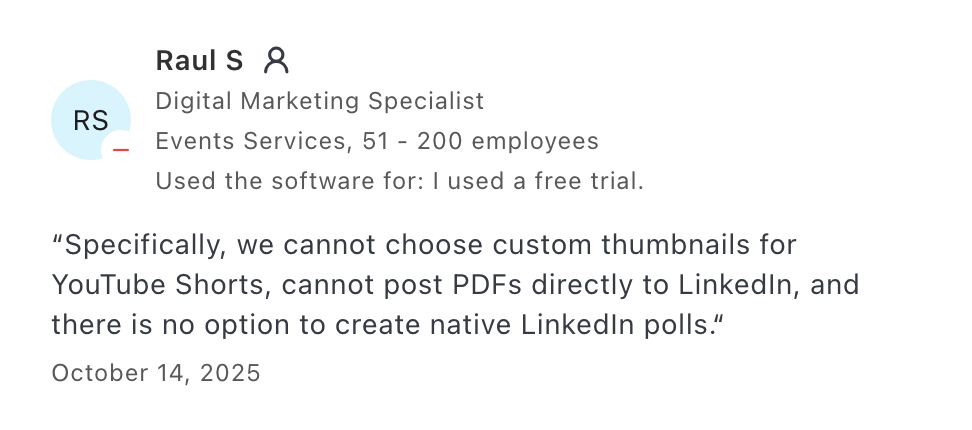
However, some reviewers note missing functions; one user complained that they could not choose custom thumbnails for YouTube Shorts, post PDFs directly to LinkedIn, or create native LinkedIn polls.
Trustpilot
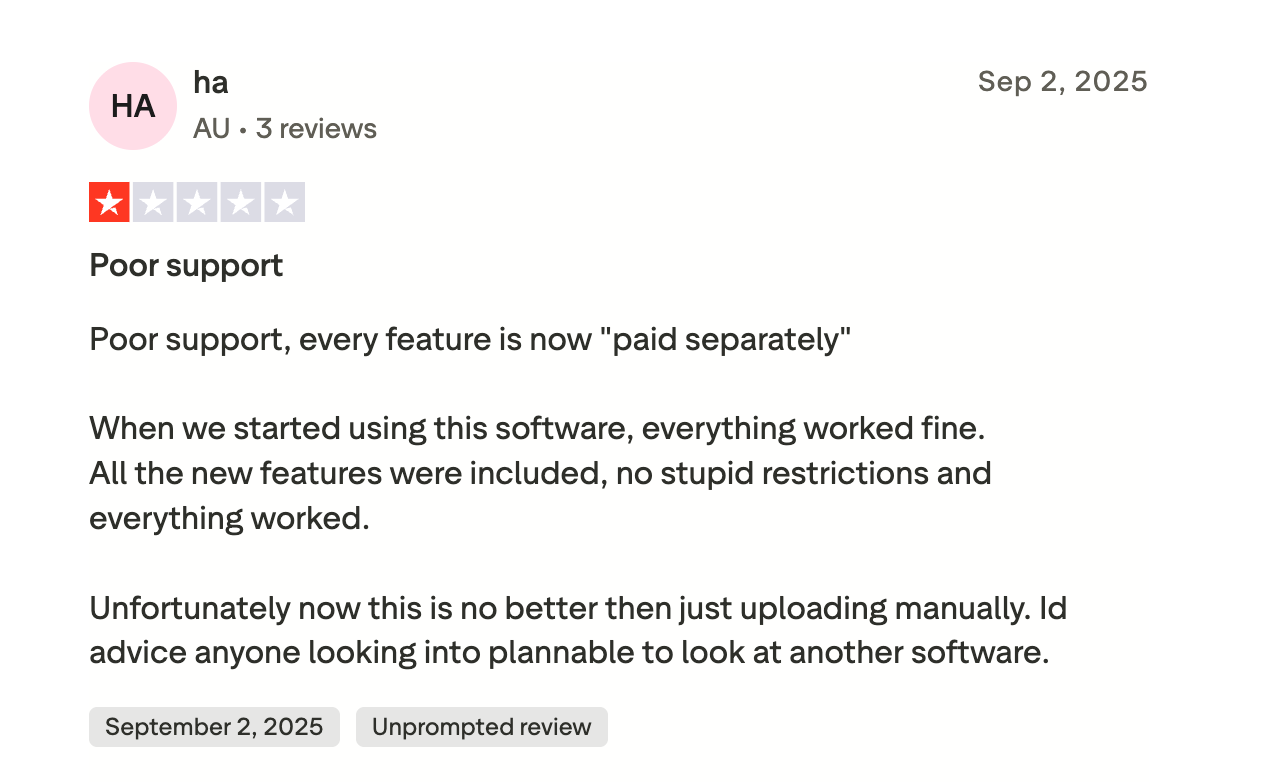
Planable’s TrustScore is 4.5/5 from about 70 reviews. Customers often describe it as intuitive and efficient, appreciating the visual previews and smooth approval workflows. Reviewers highlight that the free plan offers useful features, but there are few negative reviews to extract concrete issues.
G2
On G2, Planable has an average rating of 4.6/5 from around 936 reviewers. About 75% of users give it five stars, while only 1% rate it three stars or below.
G2’s AI-generated summary shows that users love the tool’s ease of use, post scheduling, and calendar view, but they frequently mention some drawbacks: high pricing, plan limitations that force expensive upgrades for additional campaigns
Why Planable Users Look for Alternatives
Despite Planable’s strong collaboration features, user feedback reveals several deal-breakers that drive teams to search for other social media management tools.
1 – High pricing and restrictive plan limits
Planable’s per-workspace model means that agencies or big brands pay separately for each client workspace.
Also, advanced analytics and engagement tools require extra add-ons.
Comments from review platforms indicate that the US$33–US$49 per-workspace plans can be a barrier for agencies managing multiple clients.
2 – Limited platform support and feature gaps
While Planable supports the major social networks, reviewers and analysts note that it still lacks support for new platforms such as Bluesky, Mastodon, or Telegram.
Crazy Egg’s review notes that although Planable can publish to Facebook, Instagram, LinkedIn, X/Twitter, Google Business Profile, YouTube, TikTok, Pinterest, and Threads, teams may still need a secondary tool if their strategy relies on other channels.
A Capterra reviewer complained that they could not choose custom thumbnails for YouTube Shorts, post PDFs to LinkedIn, or create LinkedIn polls.
3- Shallow analytics and add-on extras
Several sources point out that Planable’s analytics are basic and available only as an add-on. Which is obviously a big downside for social media professionals.
The G2 summary highlights that users find the lack of analytics features limits their ability to report effectively for clients.
3 Strong Planable Alternatives for 2025
1. Nuelink – automation with broader channel support
Why it’s better:
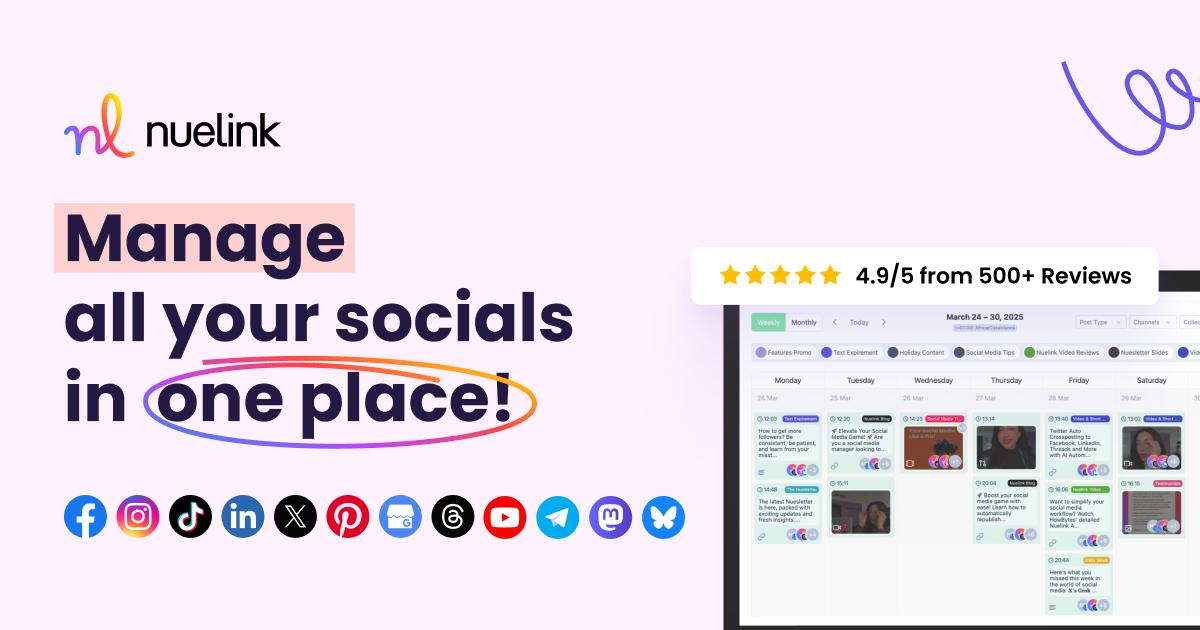
Nuelink goes beyond simple social-media scheduling; it offers end-to-end automation features. It supports e-commerce platforms (Shopify, Etsy), podcast platforms (Shopify, Captivate), and blogging platforms (Ghost, Medium), enabling users to automate posting across these channels.
Users can set automatic sharing rules so that when a new product or blog post goes live, Nuelink detects it and distributes it across multiple social networks with AI-generated captions and hashtags.
Pricing starts at around US$18 per month, and plans include a free trial; there are no extra add-ons. You get access to all the features from day one.
2. Agorapulse – unified inbox and robust reporting
Why it’s better:
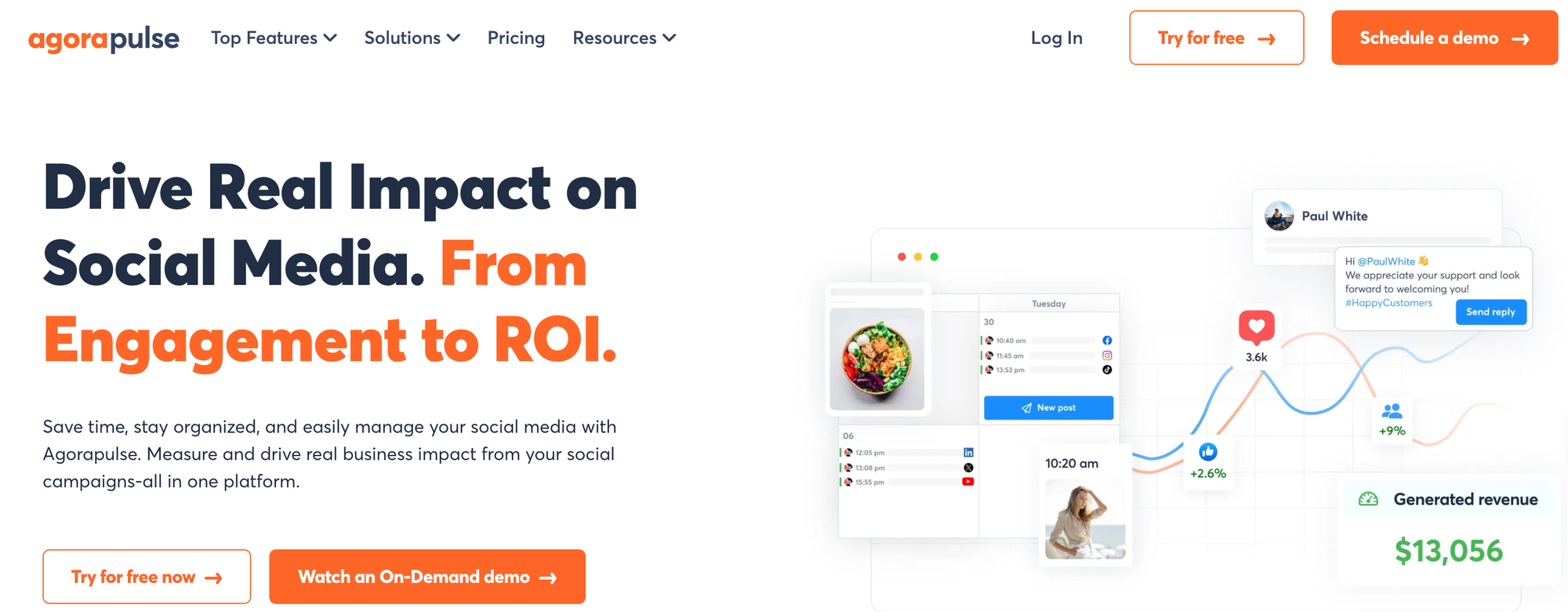
Agorapulse shines with its unified inbox. All comments, messages, and reviews from every platform appear in one place, making it easy for teams to prioritize and reply fast.
It also offers shared calendars, an easy post scheduler, and social listening to track brand mentions across social networks, blogs, and news sites.
Its reporting and ROI dashboards compare channel performance and connect to Google Analytics, giving teams a full view of what drives results.
Compared with Planable’s per-workspace pricing and paid analytics add-ons, Agorapulse delivers deeper engagement tools, built-in reporting, and a more transparent cost structure.
3. Vista Social – AI-powered automation with full platform coverage
Why it's better:
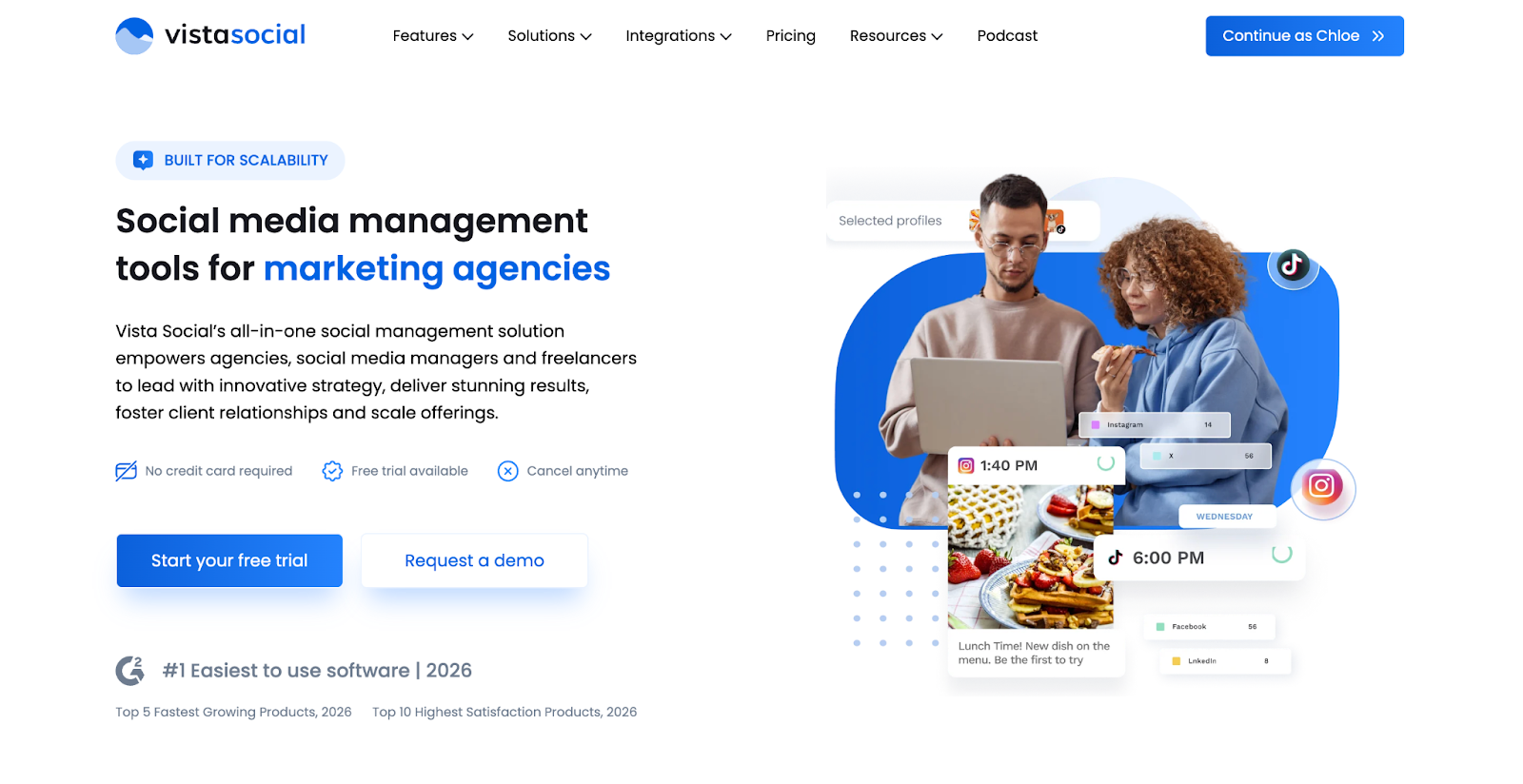
Vista Social goes beyond scheduling with advanced AI automation that handles content creation, inbox management, and lead capture all from one dashboard.
Where Planable focuses primarily on approvals and collaboration, Vista Social covers the full social media management stack, including publishing, engagement, analytics, DM automation, and social listening.
It supports all major networks including Facebook, Instagram, X (Twitter), LinkedIn, TikTok, YouTube, Pinterest, Google Business Profile, Bluesky, Threads, Reddit, and Snapchat, addressing one of Planable's key limitations around platform coverage.
Its built-in AI assistant and ChatGPT integration help teams generate captions, hashtags, and post ideas in seconds, while the unified social inbox with AI-powered sentiment analysis ensures no message goes unanswered.
Compared with Planable's per-workspace pricing and paid analytics add-ons, Vista Social includes robust cross-platform reporting built into every plan. Plans start at $64/month (billed annually), with a 14-day free trial available.
4. Sprout Social – comprehensive engagement, publishing and analytics
Why it’s better:
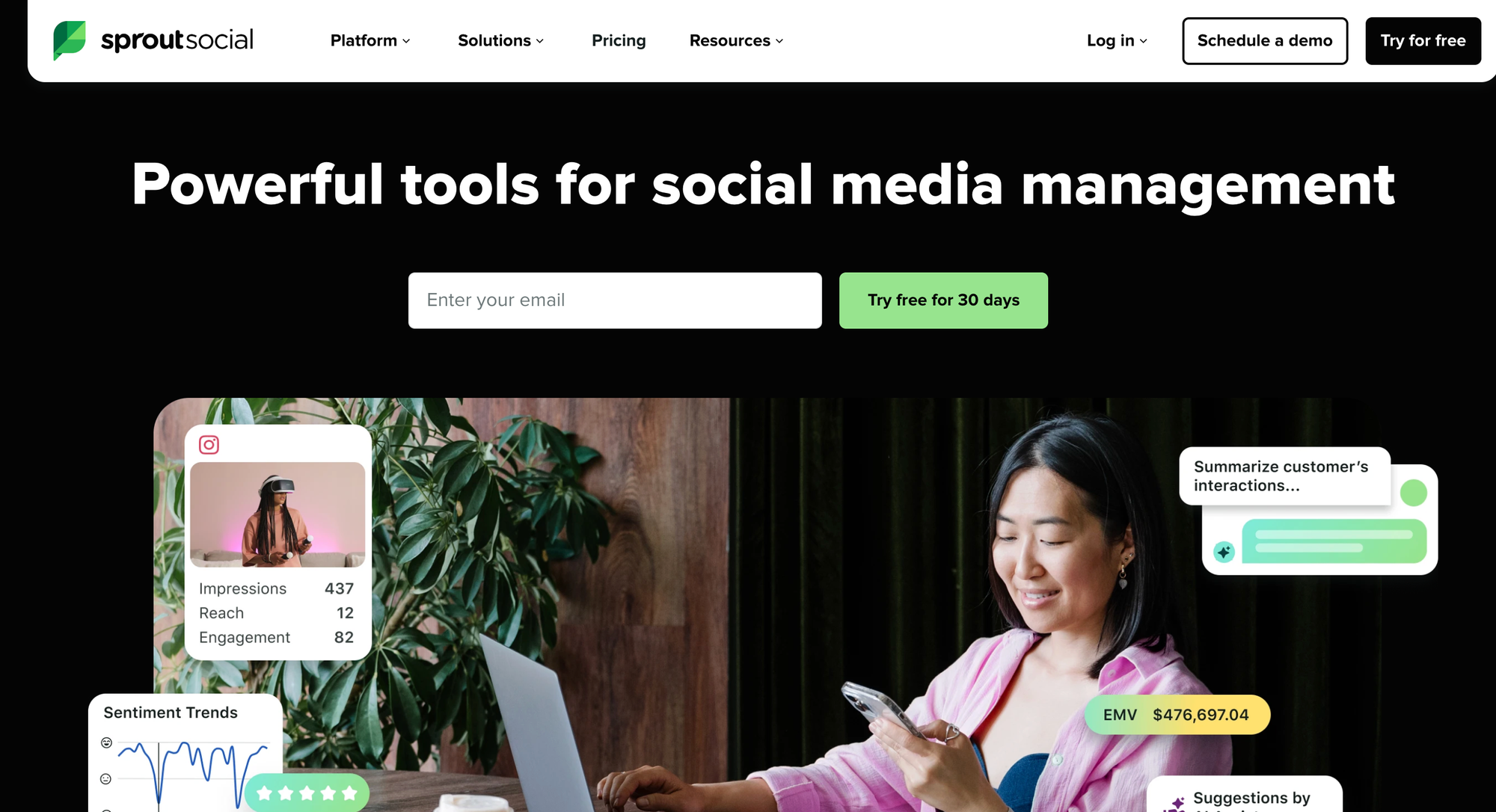
Sprout Social is a full-suite platform for engagement, publishing and analytics.
Its Smart Inbox pulls all messages into one stream and includes tagging, moderation tools, and full conversation history.
Teams can collaborate efficiently using custom inbox views, case management, and collision detection to avoid reply overlaps.
For planning, Sprout offers a collaborative content calendar and an advanced scheduler with queues, drafts, and multi-profile publishing.
Its analytics are among the strongest in the industry, with detailed profiles, post and cross-network reports, plus Google Analytics integration.
Sprout is more expensive, but it gives teams far more depth than Planable’s basic reporting and paid add-ons.


