

After years of writing social media posts, blogs, and newsletters about social media, I’ve basically written content that followed every rule, best times to post, trending formats, platform-specific “hacks”, and written content on all of these topics as well. Scroll through the blog, and you will find whatever social media adjacent topic you can think of.
And while those things can help in the short term, they stopped being the reason brands grow a long time ago. What actually separates brands that scale from brands that stall is brand identity on social media.
The algorithm rewards recognition. If a post could belong to five different brands, it belongs to none, and it performs exactly like that.
This is where I see most brands struggle. Not because their content is bad, but because it’s unclear. One post is educational, the next is trendy, the next is salesy, and none of them build momentum together. Individually fine. Collectively forgettable.
Modern social media growth isn’t about “better content.” It’s about a clear identity expressed consistently.
That’s why completely different brands can win with completely different social media brand strategies. Different visuals. Different tones. Different formats. However, they all know exactly who they are, and they never deviate for the sake of a trend.
Rhode: Clean Girl Aesthetics and Branding
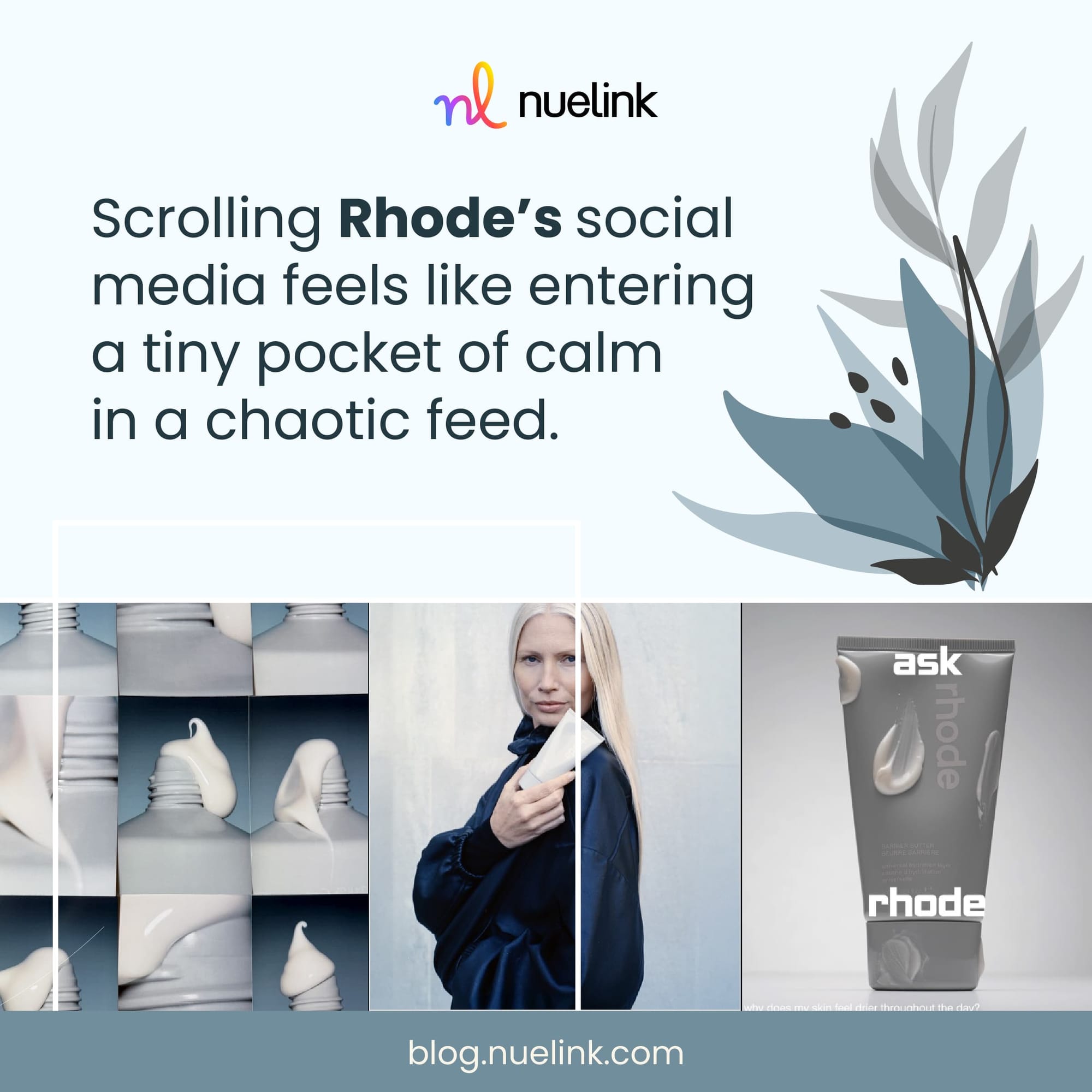
If you scroll through Rhode’s feed, the first thing you notice isn’t the products. It’s calm. And that calm is intentional.
Rhode isn’t trying to compete with flashy, over-produced skincare ads. Every post, every Reel, every story exists to reinforce its clean girl aesthetics.
Rhode nails something most brands miss. Their social media content strategy relies on small, repeatable elements:
Routine-based Reels: AM/PM skincare rituals feel like life documentation, not a product pitch. Especially with Hailey Bieber, the founder of the brand, who pocketed $1 billion from selling the brand late last year, sharing her skin struggles and how she uses the products.
@rhode get ready with HB 🤍
♬ Aesthetic - BoominBeats
Soft visuals & muted tones: Instantly recognisable even without a logo, we all saw and want that phone case.
Research shows that consistent visual identity can improve brand recall by up to 80%.
UGC over studio campaigns: Rhode’s feed feels authentic because it’s powered by real users, or it feels like that from the outside at least. Consumers trust peers over polished campaigns every single time.
The sum effect? Scrolling Rhode’s social media feels like entering a tiny pocket of calm in a chaotic feed. Since Rhode understands exactly who they’re talking to:
- Skincare buyers are overwhelmed by too many choices.
- Consumers crave simplicity instead of complexity.
- People who want their routine to feel like a moment of calm, something that brings peace and stability.
By meeting their audience where they are, exhausted, distracted, over-stimulated, Rhode doesn’t just sell skincare on social media; it sells calm. And that calm translates directly into conversion.
My experience shows that audiences who feel aligned with a brand’s identity are more likely to click, engage, and return, and Rhode proves this at scale.
Alo: Selling The Lifestyle
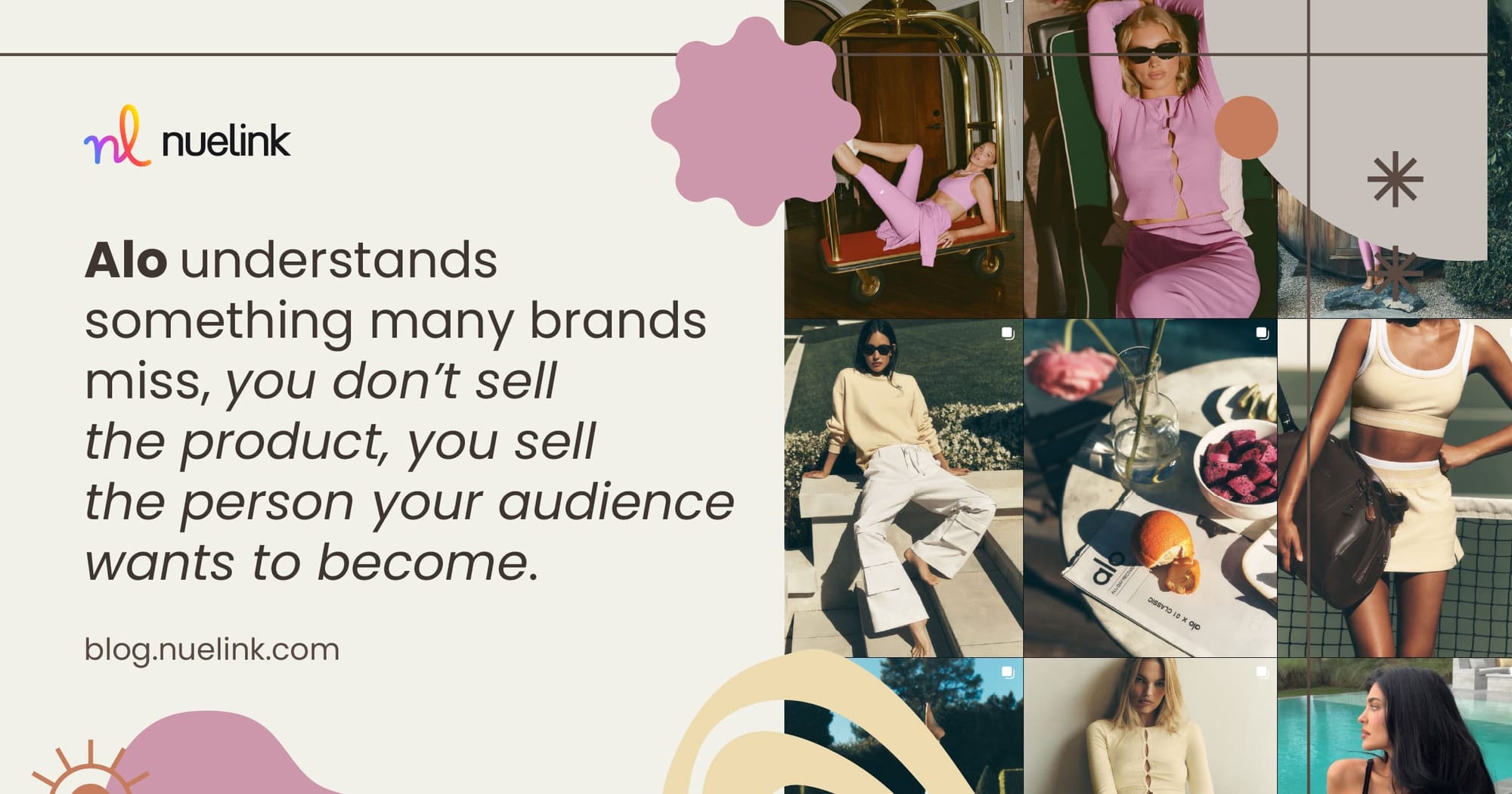
Scroll through Alo Yoga’s social media, and you won’t see a typical product catalog. You’ll see people living a lifestyle.
That’s because Alo understands something many brands miss. you don’t sell the product, you sell the person your audience wants to become.
Wellness as identity, not a trend Alo doesn’t chase fleeting fitness fads or Instagram poses. Every post, Reel, or story reinforces wellness as a way of being, creating a social media presence that feels aspirational and authentic.
Alo excels at making every piece feel natural and platform-native:
- Influencers as participants, not promoters: They practice, they move, they engage, never a “shop now” moment in disguise.
- Clothes shown through motion, not static poses: Outfits feel like tools for life, not props for a photo shoot.
- Platform-native content: Posts blend seamlessly into feeds, feeling more like inspiration than advertising.
This strategy keeps the audience engaged without ever making them feel “sold to.” And that’s rare. Alo speaks directly to people who:
- See wellness as part of their identity, not just a trend.
- Want to feel healthy, not just look fit.
- Crave aspirational content they can relate to and emulate.
Alo doesn’t market clothes, it markets the person you become while wearing them. Lifestyle-driven content can increase engagement compared to traditional product posts.
Savage X Fenty: Value-Led Content Strategy
Scroll through Savage X Fenty feed, and you see real people, real bodies, real energy, and instantly feel the brand’s identity.
That’s because the brand understands a key truth I see every day as a content writer: social media loyalty comes from values, not visuals.
Every post, every Reel, every IG Story reinforces the brand’s commitment to representation. Savage X Fenty’s social media presence feels like an invitation to a community, not a showroom.
- Real bodies, real reactions, real energy: Content is relatable, not aspirational in an unrealistic way.
- Community-led hashtags and creator features: Fans and creators become part of the story, not just a marketing tool.
- BTS content that humanizes the brand: Campaign prep, behind-the-scenes, candid moments.
@savagexfenty A casual flex. 😮💨 #MadeToMakeMoves ♬ original sound - Savage X Fenty
Most fashion brands over-invest in aesthetics and under-invest in identity. Savage X Fenty flips that, and the results are measurable. Savage X Fenty resonates with consumers who:
- Crave representation and authenticity.
- Support brands aligned with their values.
- Want to feel part of a community, not just a transaction.
By staying true to its identity, the brand builds emotional loyalty, which consistently drives higher engagement rates. Followers don’t just engage, they advocate. They share posts, participate in hashtags, and even defend the brand online, creating organic amplification that no paid ad can buy.
Aldi: Why Personality Beats Production Quality
Aldi’s social media is a masterclass in one thing, you don’t need perfect visuals to be unforgettable.
Scroll through their feeds, and you’ll find memes, parody posts, and fast, reactive content that feels alive, their content strategy is a bit unhinged but it works for them. There’s no glossy ad aesthetic, no carefully staged photography, just personality.
This is exactly the kind of strategy that consistently beats high-production campaigns when done right. People engage with brands they relate to, not brands they admire from a distance.
Aldi’s identity is clear, they are smart, budget-friendly, and not afraid to have fun. Their social media never pretends to be something else, it owns its personality.
- Meme-led content and trend hijacking: Posts ride viral waves without trying to be “polished”.
- Comment sections as growth channels: Engaging directly with users builds community and boosts visibility.
- Fast, reactive posting style: Timely content aligns with platform culture and keeps engagement high.
According to Marketing LTB, posts that use humor and relatability have up to 3.5x higher engagement rates than visually “perfect” campaigns, a pattern Aldi proves over and over. Their followers, and by extension, their consumers:
- Are price-conscious but digitally savvy.
- Appreciate brands that are honest, self-aware, and culturally fluent.
- Want to laugh, not just consume.
By leaning into humor, Aldi makes itself memorable. Followers don’t just notice the brand, they share it, comment on it, and make it part of their online conversations.
The Real Pattern Behind High-Performing Brands, And How to Apply It
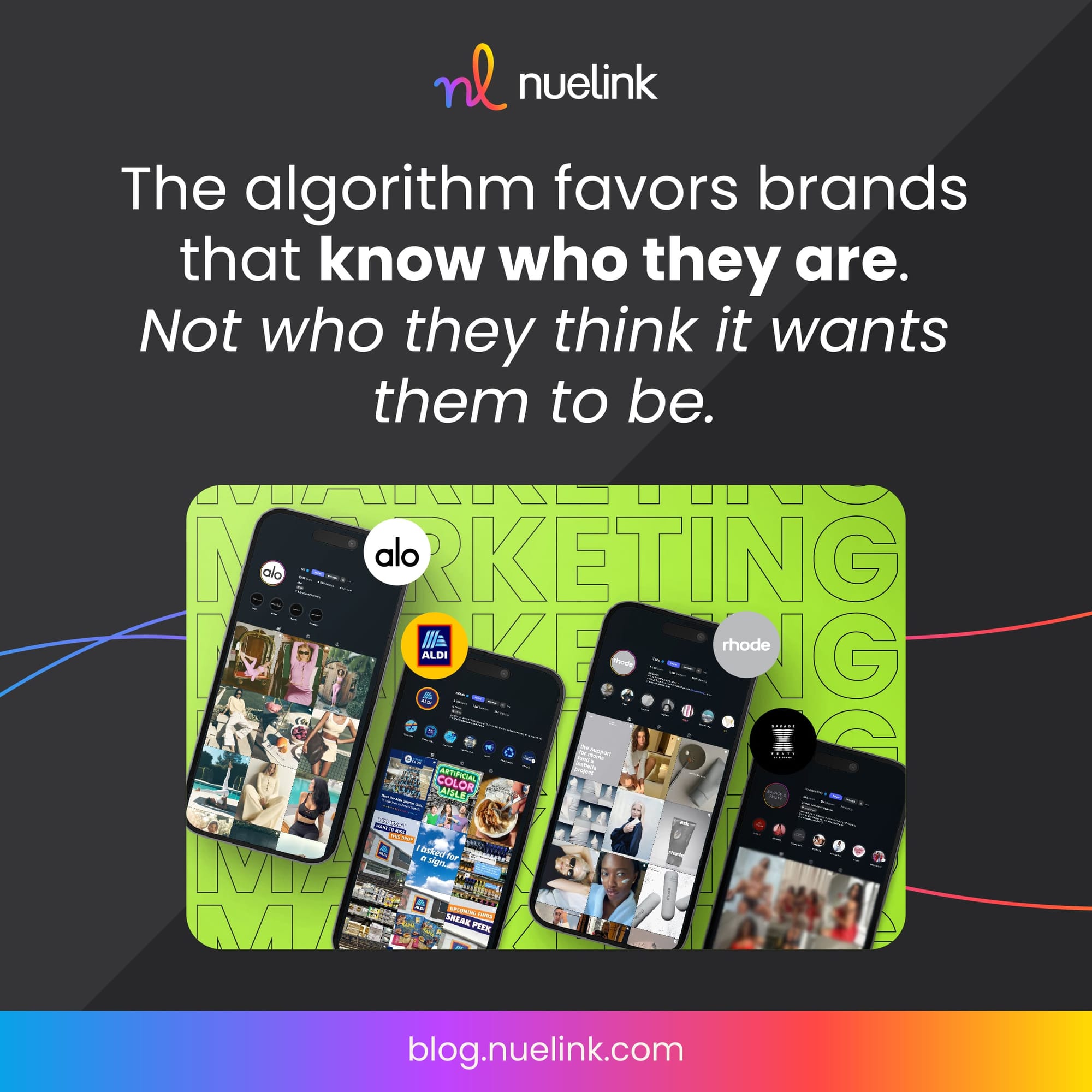
After studying Rhode, Alo, Savage X Fenty, and Aldi, one thing is undeniable, the most successful brands all share the same pattern:
- Instant recognizability: Scroll through their feeds blindfolded, and you’d still know it’s them.
- Content guided by identity, not trends: Every post reinforces their core message, whether it’s calm, aspirational, inclusive, educational, or self-aware humor.
- Deep understanding of audience psychology: They know exactly what their followers value, what they respond to, and what they ignore.
Put simply: the algorithm favors brands that know who they are. Not who they think it wants them to be. There are a few things you can do to emulate this:
Define your brand in one sentence
If your audience can’t describe what your brand stands for in a single sentence, neither can the algorithm.
Identify 3 content pillars tied to your identity
Your pillars should reflect what your brand truly stands for, not what’s trending.
Choose platforms that match your audience behavior
A strong brand doesn’t live on one platform, it adapts across several. The identity stays the same, but the expression shifts. Tools like Nuelink make this possible by helping you customize your message for each platform from one place.
Create repeatable formats instead of one-off posts
Routine-based Reels, recognizable meme templates, and short-form educational videos allow brands to scale visibility without losing their identity.
The core idea here is that if your content could belong to any brand, it doesn't belong to you. Identity compounds over time. Trends fade. Virality is short-lived. But clarity, consistency, and alignment with audience psychology create long-term growth.
Focus on who you are, stay consistent, and the algorithm, and your audience, will follow.


