

Most creators treat a scroll-past as a failure. No like. No save. No comment. End of story.
But that assumption ignores how people actually consume content today. On modern social platforms, especially Instagram, TikTok, LinkedIn, and Threads, passive consumption dominates active engagement. Studies consistently show that over 70% of users scroll without inte
Scrolling past doesn’t mean your post was ignored.
It means it entered a high-speed decision loop where attention, recognition, and memory still matter.
In reality, the scroll is often the beginning of influence, not the end of it. Social media behavior doesn’t stop when someone swipes up. It continues quietly, cognitively, and over time, that invisible behavior shapes trust, familiarity, and future action.
1. What Happens After a Scroll
When someone scrolls past your post, several subtle actions can happen in seconds, without any visible signal. Things that happen out of your sight, but still affect your brand:
Username Recognition
Even without engagement, users often register your handle subconsciously. Repeated exposure increases name recognition, and research on digital recall shows that brand familiarity can form after as few as 5–7 passive impressions, even without interaction.
Visual or Headline Memory
Strong visuals, distinctive colours, or clear hooks stick. If you need help in this department, check this blog post. A bold opening line or recognisable design style becomes mentally tagged, making your future posts easier to process and more likely to stop the scroll later.
Topic Association
Audiences begin associating your account with a specific idea or feeling:
- This is the Instagram bio tips account.
- This person always explains platform changes clearly.
- Their posts feel calm and practical.
This is positioning happening in real time, without likes or comments.
Mental Bookmarking
Not every interested user saves content. Many simply remember who shared it. Users often rely on recognition over retrieval, meaning they scroll with the assumption they’ll “see it again later,” rather than saving it. This isn’t far from the truth, given how algorithms work now, your content is likely to be recommended to users who stop scrolling and watch the video all the way through, even if they don’t like or comment.
2. Why Scroll-Pasts Still Build Brand Familiarity

On social media, familiarity is rarely instant. Most users don’t engage the first time they see an account, or the second, or even the fifth. Instead, trust is built through repeated passive exposure.
The more often people see something, the more positively they feel about it, even without conscious interaction.
On platforms like Instagram and TikTok, this effect is amplified. Feeds are algorithmically designed to resurface accounts that align with user interests, creating multiple low-effort touchpoints over time.
Passive Consumption Is the Default
Recent platform behaviour studies suggest that a low number of viewers actively engage with a post, while the remaining majority consume content silently. This doesn’t mean indifference. It means users are:
- Watching without liking.
- Reading without commenting.
- Remembering without saving
In fact, many users treat likes and comments as social signals, not personal feedback. They engage selectively, often reserving interaction for creators they already trust or know well.
Familiarity Precedes Trust
Before someone engages, they usually go through three invisible stages:
- Recognition: I’ve seen this account before.
- Relevance: This content usually applies to me.
- Safety: Engaging with this feels worth it.
Scroll-pasts help move people through these stages. Each impression makes future engagement feel easier and more natural.
The “I Know Them” Accounts
Everyone has them:
- Accounts they recognise instantly.
- Creators whose content they expect to be useful.
- Brands they trust, despite rarely interacting with.
These are not weak connections. They’re latent relationships. And when the right post appears, a pain point hits, or timing aligns, these quiet followers are often the first to save, click, or convert.
3. When Scroll-Pasts Turn Into Future Engagement
For most users, likes, saves, follows, and clicks are the result of accumulated exposure, not a single standout post. Scroll-pasts act as quiet impressions that build context, making future actions feel familiar rather than risky.
The Tipping Point Effect
Data shows that users typically make 8 content touchpoints before taking a meaningful action, such as following an account or clicking a link. Each scroll-past contributes to that total, even if it leaves no visible trace.
From Recognition to Action
Scroll-pasts gradually reduce friction. By the time someone engages, they already:
- Know what type of content you share.
- Expect a certain quality or tone.
- Trust that interacting won’t be a waste of time.
This is why conversion-oriented actions, like saves or link clicks, often come from users who’ve never interacted publicly before. They’ve been watching, absorbing, and waiting for the right signal.
Why Engagement Often Comes in Waves
Creators frequently notice delayed engagement:
- A sudden spike in saves after weeks of flat metrics.
- New followers referencing old posts.
- Comments like “I’ve been following for a while…” or “I never comment but…”
These moments aren’t random. They’re the visible result of compounded scroll-pasts finally turning into action.
Consistency accelerates this effect. When visuals, messaging, and positioning stay aligned, users connect the dots faster, making engagement feel inevitable rather than optional.
4. What This Means for Your Content Strategy
If scroll-pasts are part of the process, not the problem, then the way success is measured needs to change.
Chasing instant engagement can distort how creators evaluate performance. A post that “underperforms” publicly may still be doing critical background work, building recognition, positioning, and trust.
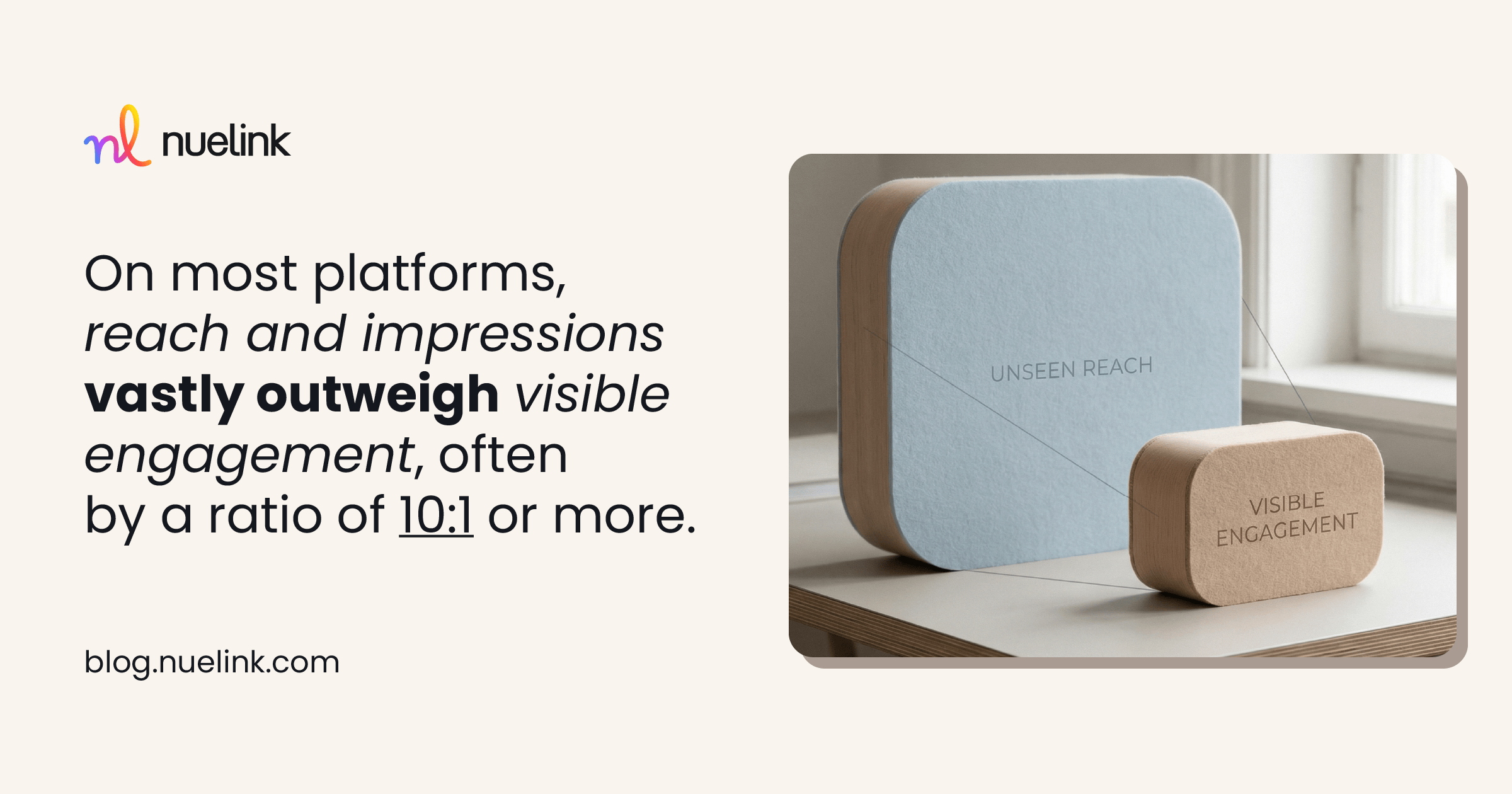
Likes and comments reflect active feedback, but they represent only a fraction of total impact. On most platforms, reach and impressions vastly outweigh visible engagement, often by a ratio of 10:1 or more.
This means:
- A post with low likes but strong reach can still strengthen brand recall.
- Repeated exposure matters more than one-off spikes.
- Consistency often outperforms virality over time; going viral is also great, don’t get me wrong.
When engagement is delayed, clarity becomes more important than cleverness. Strong content strategies prioritise:
- Consistent visual identity (colours, layouts, video framing). If you need help with your designs, check out these Canva templates.
- Repeated core themes and talking points.
- Familiar hooks that reinforce what you’re known for.
This repetition isn’t boring, it’s memory-building. The easier your content is to recognise mid-scroll, the faster users move from passive viewing to active engagement.
Instead of asking, “Did this post perform well?” A more useful question is, “Did this post reinforce who I am and what I talk about?” When your audience finally engages, it’s often because your content has already done its job silently.
When your audience finally engages, it’s often because your content has already done its job silently.
Social media influence isn’t always visible in real time. Behind every like, save, or follow is a trail of unnoticed moments, quick glances, half-reads, and scroll-pasts that quietly shape perception. These moments don’t show up in analytics dashboards, but they play a critical role in how audiences decide who to trust, follow, and buy from.
Not every post is meant to convert immediately. Some are meant to familiarise, others to position, and a few to finally activate. And when engagement eventually happens, it rarely feels sudden to the audience, only to the creator.
If you’re managing content across platforms, tools like Nuelink help maintain consistency without burnout, making it easier to stay visible long enough for that unseen impact to turn into real results. Because in social media, what works isn’t always loud, but it always adds up.


